
 Tiếng Việt
 English
 한국어
 简体中文
 繁體中文
 Русский
Dinh Cau Review - A Spiritual Landmark in Phu Quoc
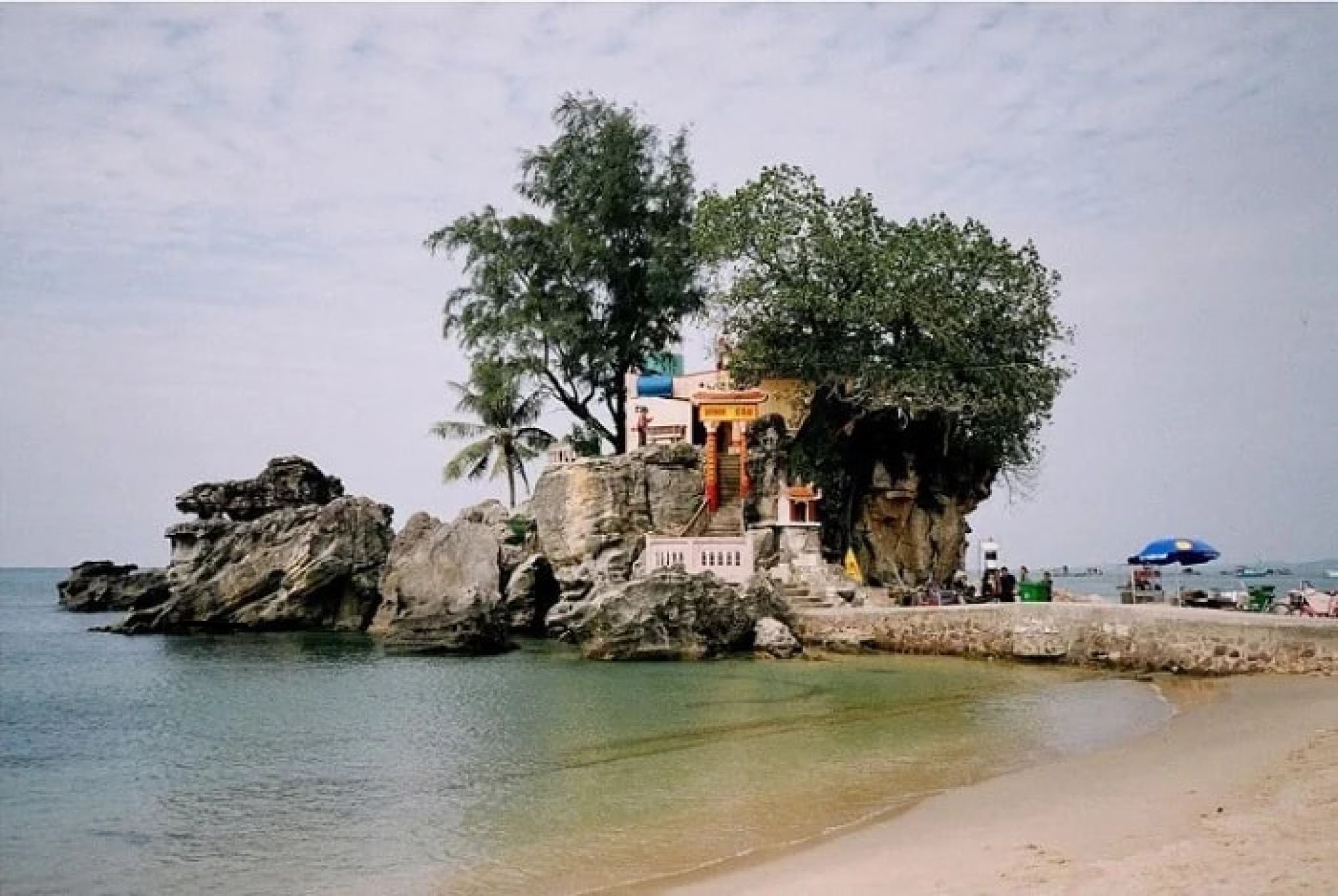
If you're looking for a spot where you can gaze out to sea, take great photos and learn about the spiritual life of Phu Quoc's local people, Dinh Cau is well worth a visit.

Dinh Cau draws plenty of visitors with its traditional temple architecture, perched on a rocky outcrop facing the sea. It offers wide-open views and is steeped in stories tied to the lives of the fishermen of the Pearl Island.
Join Eco San Hô Đỏ Travel as we review what there is to see at Dinh Cau in this article!
What makes Dinh Cau in Phu Quoc special?
Dinh Cau isn't just one of the island's best-known attractions – it's also a long-standing place of worship, deeply woven into the spiritual life of Phu Quoc's fishermen.
Built on a rocky outcrop overlooking the sea, the temple is also a standout photo spot for visitors.
Location and highlights of Dinh Cau
Located at the mouth of the Duong Dong River, Phu Quoc Special Zone, An Giang Province (formerly Kien Giang).
Although it sits on the rocks, the temple has staircases leading up to it from several directions.

From up high, you can take in sweeping views of the sea around Dinh Cau, the Duong Dong river mouth, boats coming and going, Bach Dang Park and more.
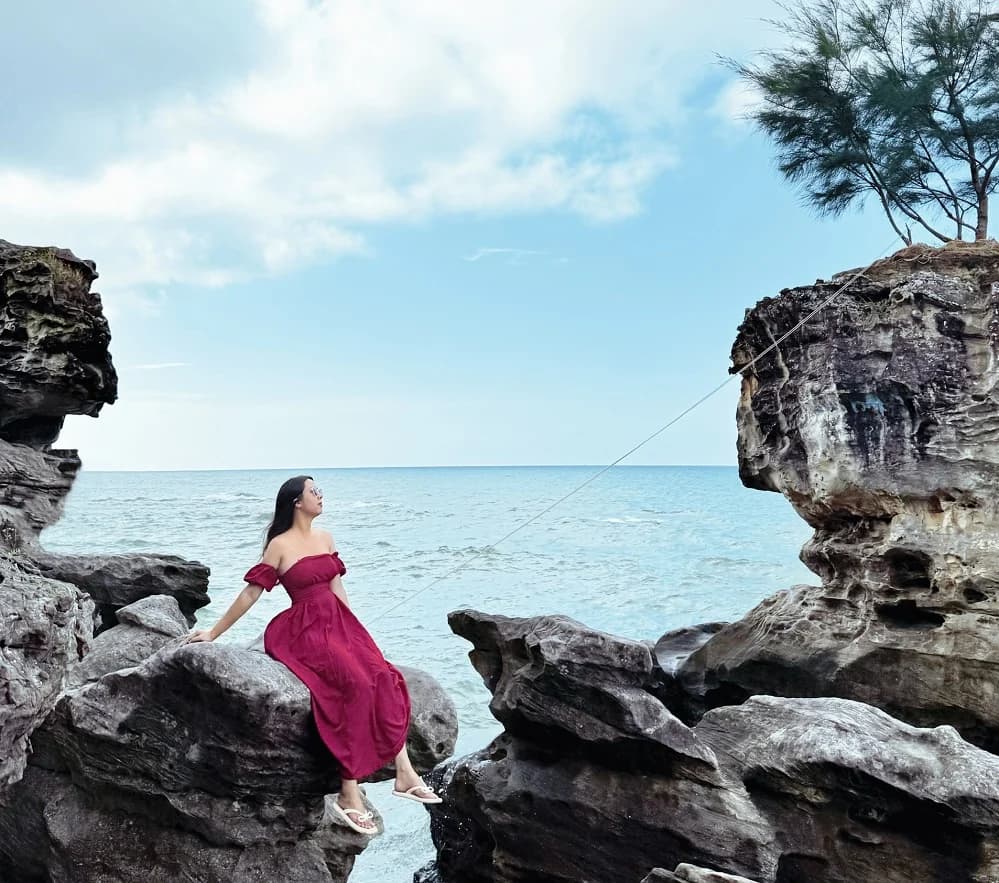
Another highlight: you can make your way out onto the nearby rocks to enjoy the sea breeze and snap some photos. Try a shot like the one below!
History and spiritual significance of Dinh Cau
According to local legend, fishermen in the past (from the 17th century) constantly faced huge waves, storms at sea and many hidden dangers on their voyages.

Then a rocky outcrop appeared at the river mouth, giving people a landmark to guide them safely back to shore. While no one knows exactly when Dinh Cau first came into being, the temple is recorded as having been built in 1937.
Check out The Legend of Dinh Cau, Phu Quoc for more stories about the history of this attraction!
Restored many times over the years, Dinh Cau Temple has remained a spiritual landmark for decades.

Not only fishermen, but also visitors and local residents regularly come here to light incense and make offerings, praying for peace and protection.
A first-hand review of Dinh Cau for first-time visitors
Dinh Cau is closely tied to everyday local life, so you don't need an elaborate itinerary or plan any special activities when you visit.
Just come along to light incense, pay your respects at the temple and take some photos as keepsakes!
If you know nothing about this place yet, let Eco San Hô Đỏ Travel show you around:
The architecture and the locals' place of worship
Your first impression will be a paved stone walkway leading straight to the steps up to Dinh Cau Temple.

This walkway didn't exist before – it was built in the last few years to enhance the scenery around Dinh Cau and keep visitors safe!
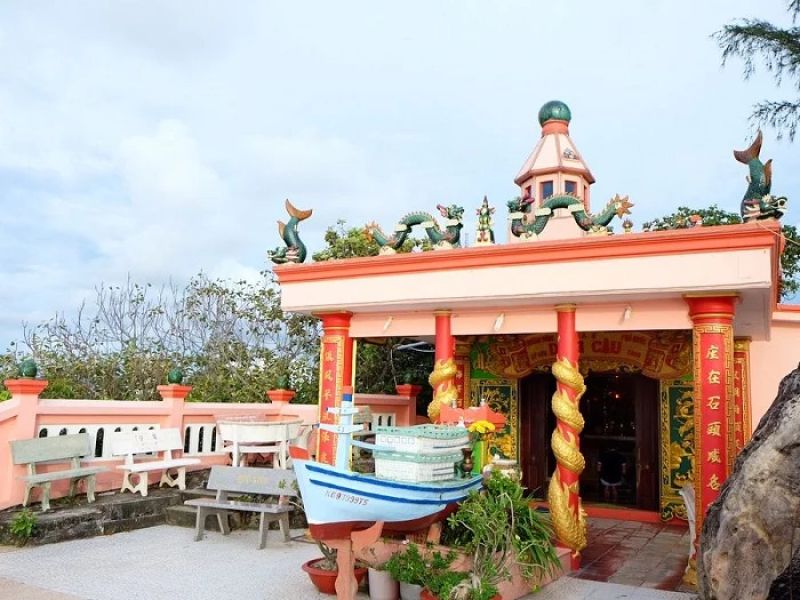
Numerous restorations have transformed the temple from a simple, rustic shrine into a more dignified place than ever. This also shows just how much the local community values the spiritual traditions of Dinh Cau.

The main hall is dedicated to Chua Ngoc Nuong Nuong and two young deities, Cau Tai and Cau Quy – revered by locals as protectors of fishermen whenever they head out to sea.
Whether you come to sightsee or to worship, please keep noise down, dress modestly and be respectful of the volunteers working at the temple.
Sea views and sunsets at Dinh Cau
Dinh Cau's biggest draw is its west-facing position over the sea, where at the end of each day you can watch the sunlight slowly turn golden-orange before it sinks below the horizon.
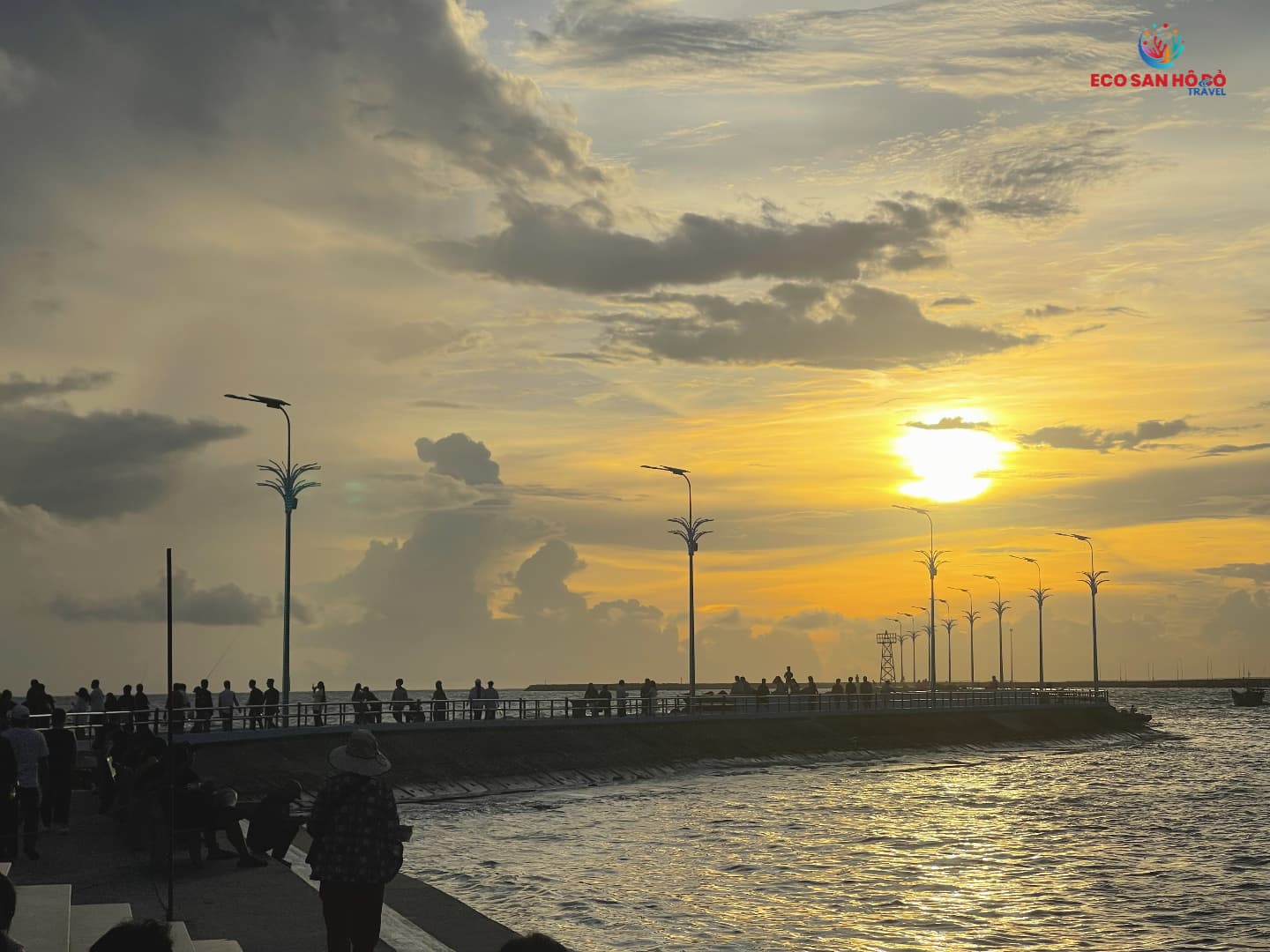
If you're a sunset chaser wherever you go, this is a spot worth considering at around 5:00 pm. Or you can try squid fishing and catch the sunset right out at sea.
The best photo spots for visitors to Dinh Cau
Here are a few photo spots to help you get some great shots:
- The stone walkway / steps leading up to Dinh Cau: Ideal for photos with the temple's architecture as the backdrop and focal point.
- The courtyard (looking out to sea from the main hall): Come in the morning for peaceful scenery and fresh air, or in the late afternoon to capture the soft glow of sunset.
-
The view from the lighthouse at the river mouth: instead of shooting at the temple, stand out at the river mouth (by the breakwaters) and shoot back towards Dinh Cau.
-
The rocky outcrops: stand or sit on the rocks for photos with the waves.

For the best sunset views, visit Dinh Cau during Phu Quoc's dry season (from November to April). In the rainy season, clouds or rain can make it hard to catch the sunset you're hoping for.
Why visit Dinh Cau
The big plus is that you can enjoy several experiences in one, even on a simple sightseeing and temple visit:
- Beautiful scenery: right by the sea, with plenty of open, natural backdrops for taking in the ocean and the sunset.
- Cultural value: Dinh Cau is an everyday place of worship for local fishermen, well worth learning about and sharing stories of.
- Free entry: No admission ticket needed, making it perfect for budget-friendly trips.
- Convenient location: right in the centre of the island, so it's easy to combine with other nearby attractions in the south or north of the island.
That said, the Dinh Cau area isn't very large, so it's best suited to a short visit of around 30–60 minutes, or a bit longer if you're staying for the sunset.
Places to combine with your visit to Dinh Cau
After visiting Dinh Cau, you can carry on exploring several other nearby spots without needing to keep hopping on transport.
- Dinh Ba Thuy Long Thanh Mau: On the same street as Dinh Cau, just 50–100m away on foot. It's another spiritual site you can visit to learn more.

- Bach Dang Park: a public park open to everyone, locals and visitors alike. Take a stroll, enjoy the breeze, watch the boats and snap some photos.
- Bach Dang Night Market (formerly Duong Dong): close to Dinh Cau, about 200–300m away on foot. It was once a bustling hub for souvenirs and food. The night market went through major changes in 2026, but you can still visit to shop and eat.

See also: What's new at the Phu Quoc night market.
To make the most of your evening, set aside 1–2 hours for a walking route: Dinh Ba – Dinh Cau – Bach Dang Park – Night Market.
Then round off the evening with a bite to eat, such as bun quay Kien Xay!
Tips for visiting Dinh Cau
To make your trip go even more smoothly, keep the following in mind:
- Dress code: wear modest, respectful clothing. Trainers or sandals with good grip are best when standing on the rocky outcrops.
- Protect the environment: don't litter. Please use the designated bins to help keep the sea at Duong Dong clean.
- Getting there: you can reach Dinh Cau by motorbike, taxi or car.
If you're staying at a hotel in Duong Dong, walking there is also a rather enjoyable experience worth trying.
Frequently asked questions about Dinh Cau
Dinh Cau is dedicated to the Goddess Ngoc Nuong Nuong, together with Cau Tai and Cau Quy. Locals often come here to make offerings and pray for safety and good fortune on every voyage out to sea.
Yes, you can visit Dinh Cau in the evening, but it is open from morning until around 8:00 pm. Be sure to check the opening hours before you go.
No. Dinh Cau is free to visit for all tourists and worshippers.

Our team of tour guides and tour operators lives right here in Phu Quoc, and we write our guides from the very trips we've led: ticket prices, itineraries and hands-on tips, updated every month.
Related articles
The Legend of Dinh Cau Temple, Phu Quoc - The Story of the Deities Who Protect Fishermen at Sea
Discover the legend of Dinh Cau Temple in Phu Quoc, a shrine honouring the deities who protect fishermen at sea, along with the folk tales woven…
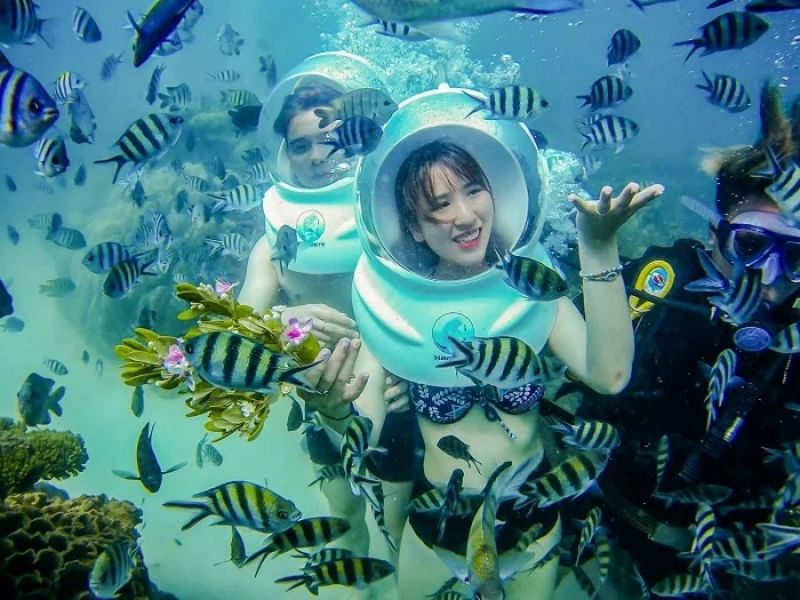
Sea Walker - Walk on the Seabed Without Knowing How to Swim
Discover Sea Walker, the seabed walking experience you can enjoy without knowing how to swim, plus essential tips to make the most of your adventure

Awaken Sea Phu Quoc - A Spectacular Flyboard Show at Sunset
Marvel at the breathtaking flips and stunts of Awaken Sea Phu Quoc, performed by world-renowned athletes.